Thinking Like a CEO
How do you delegate at the C-Level? How do you solve problems where you lack mastery? What metrics matter for the business? How do you move the revenue needle?
Culture Is the Thread That Holds Everything Together #
What does it actually mean to “think like a CEO”? What is the one job a CEO can’t hand off? How do you keep a company’s mission intact as it scales — or as AI reshapes how the work gets done? And how do you make sure the person actually doing the work still knows why it matters?
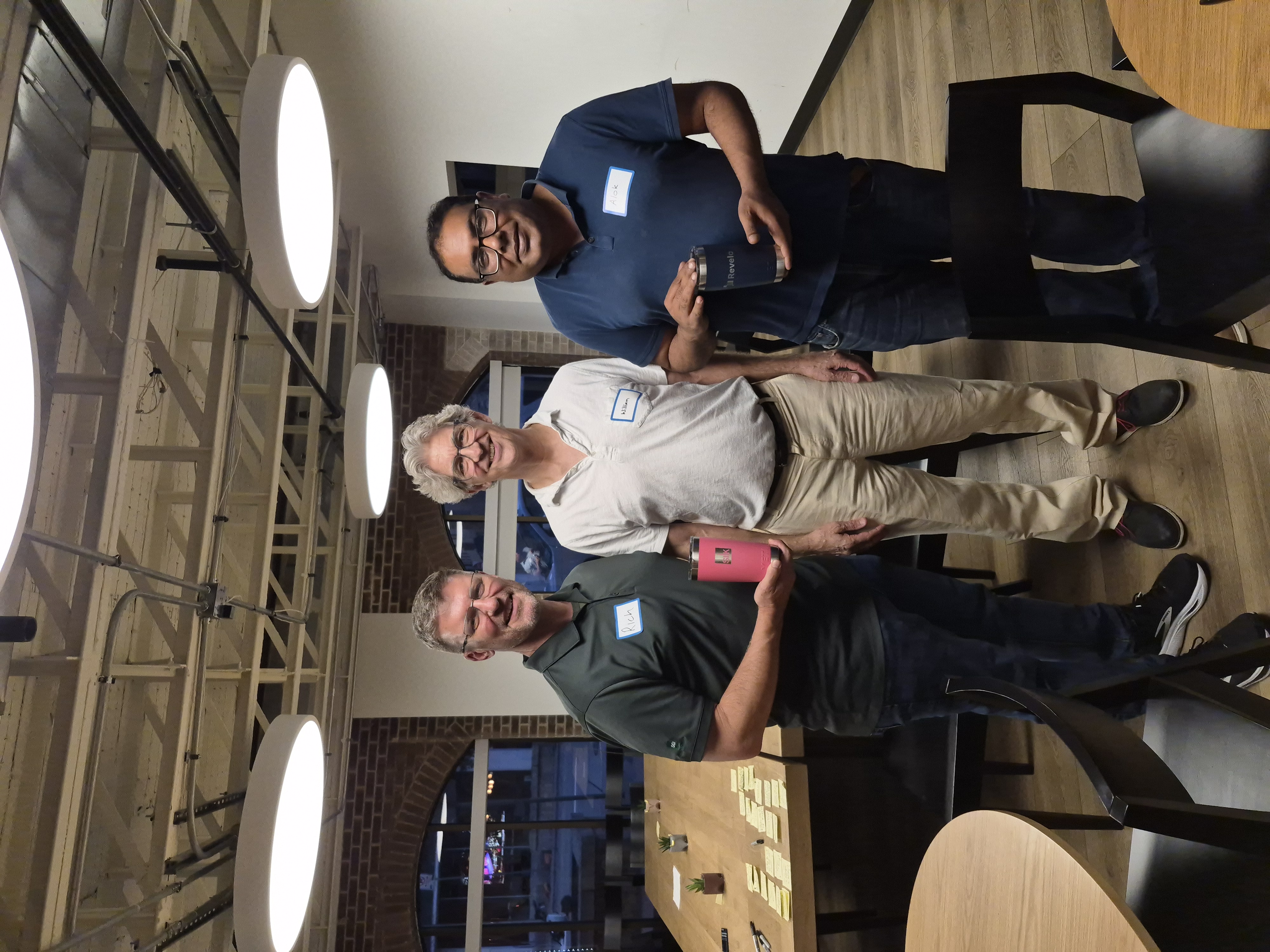
These questions framed our latest session of CTO Club, and one theme kept resurfacing: a CEO’s highest-leverage job is to keep the company’s work connected to its mission. Strategy is how that mission becomes a near-term plan; culture is how that plan becomes thousands of daily decisions. They aren’t competing claims — they’re two parts of one job.
Picture it as a golden thread. When the thread between work, strategy, and mission stays taut, any individual can point to the near-term strategy their work enables and see why that strategy serves the long-term mission — and people can act independently without drifting. When it frays, even good execution starts pointing in the wrong direction. The reasons vary company-to-company, but it’s often because leadership enables or tolerates bad habits that slowly become normal.
Lightning Talk #
Our speaker opened on the part of the job that catches technical founders off guard: being a CEO is a constant zoom-in, zoom-out exercise. You have to go deep enough to understand what one person is working on, then pull all the way out to see how the whole organization is moving and how to nudge its pieces toward the vision. Everything is on fire somewhere, and all of it eventually routes to you.
That breadth forces a hard shift. You have to kill your darlings. Engineering is no longer the most important thing in the building — the market and customers know best, not you and not your best engineer. You trade specialist depth for generalist breadth, picking strong experts to own the domains you can’t and keeping multidisciplinary judgment for yourself.
To make it concrete, the speaker offered two examples of CEOs who guard their time for the work only they can do. Dario Amodei at Anthropic has said he spends a large share of his time on the two things he considers most important: strategy and culture. Elon Musk has often described the CEO’s job as working on the hardest problems no one else can solve — find the thing that’s most broken, fix it alongside the people closest to it, then move to the next one. Different rhythms, but the same instinct: point your scarce attention at the highest-leverage problem and don’t let the calendar fill up with anything else.
That was the part that stuck with the room: culture is a CEO’s number-one priority. The CEO sets the altitude and the direction; culture is what carries it to the ground. Get it wrong and it corrupts the mission, no matter how well thought out that mission is.
Lean Coffee #
Culture Over Shareholders #
The first discussion reframed a familiar debate. The real tension isn’t customers versus culture — it’s short-term shareholder pressure versus durable culture. The group kept circling a shift that feels roughly fifteen years old: an obsession with short-term profit maximization at the expense of durable, long-term strategy. Over a long enough horizon those aren’t even in conflict — gutting things in the short term tends to create bigger problems later — but quarterly-reactive markets push relentlessly the wrong way.
We spent real time on what culture actually is, because it’s so easily misread. Culture isn’t perks. Free food and a nice office don’t make it; people do their best work when the mission itself is compelling, not because of the snacks. The group landed on a working definition: culture is the shared set of values that produces a shared set of decisions over time. It’s intangible but real, and you can usually tell almost immediately whether it’s good or bad.
That definition is what makes short-term shareholder pressure so corrosive. If culture is a decision-making system, then optimizing every quarter for the share price slowly rewrites the values underneath it — and the decisions follow.
A few warnings came with that. Culture takes on the personality of its leader — strengths and weaknesses both — and that should scare every leader. The cautionary arcs were familiar: Boeing’s engineering-first culture giving way to a profit focus and, eventually, quality problems; Meta; Travis Kalanick being the right founder for early Uber but the wrong one at maturity, where Dara Khosrowshahi fit better. There’s also a smaller-company advantage worth acting on: culture is far easier to keep intact when the team is small, so you should establish and tend it early.
The story that captured it best was H-E-B during the 2021 Winter Storm. At a store in Leander, Texas, the power went out — and rather than make stranded shoppers put everything back, staff let them walk out with their groceries for free. They could do that because H-E-B empowers managers to make exactly that kind of call without phoning it in. It’s a near-perfect illustration of Eric Ries’s incorruptible idea — how do you keep a company from rotting over time? — and the answer is empowered employees who know what they’re allowed to do. They acted correctly without escalating because the thread was intact: they knew the mission, serving Texans, and could trace the decision straight to it. That’s culture doing the CEO’s job at the edges of the org, where the CEO will never be standing.
When to Delegate #
The delegation conversation started with a military maxim: do the stuff only you can do, and delegate everything else. CEOs want to touch everything, but their time is brutally finite, so the discipline is figuring out what’s genuinely irreducible.
Anthropic’s Dario Amodei came up again as the clean example. He has said he protects most of his time for culture and strategy. Given Anthropic’s position and the stakes of building powerful AI, he wants everyone to understand how much their work matters and that it has to be done safely and responsibly. In other words, the CEO’s irreducible job is the thread.
But the group was emphatic that delegation isn’t a magic bullet where you fire and forget about it. Don’t confuse handing off a task with handing off the outcome — you still own the result. You delegate to challenge your lieutenants or employees: set the work up, then sit with the results and help them see why it went well or poorly, and make sure the outcome is measurable or confirmable. Even better, pressure-test the reasoning up front — why this approach and not that one? — to confirm their rationale aligns with the company’s mission and strategy. Delegation works far better against a clear overall strategy, which is the whole point: delegation is how the thread scales. You can only let go of work if the person holding it can trace it back to the mission themselves — and pressure-testing their reasoning is how you check that before you let go.
CEO Effectiveness in the AI Age #
The last topic asked how all of this changes as AI permeates a company. The framing that resonated, and the one to remember from the whole session: AI is an effort multiplier. Put real effort in and it compounds your output; coast, and it just makes you lazier. Most importantly, it multiplies whatever culture already exists — which is exactly why culture matters more in this era, not less.
The failure mode is non-technical CEOs assuming AI simply replaces engineers, then downsizing with no plan. The examples weren’t equivalent: Cloudflare came up as a cleaner case of AI making a category of work obsolete, while Meta came up as a broader warning about AI-driven reorgs and morale. The questions that go unasked are the important ones: what are we actually trying to achieve by cutting? Who are we now, and what are we doing with the freed-up capacity? Good CEOs answer those out loud — they communicate the strategy, and how and why it’s changing, to everyone. Because AI changes the nature of the work, the CEO has to re-tie individual work to strategy and mission explicitly, or the thread snaps. The job — even with more ground now coverable — is to keep caring about the work and keep everyone able to see why it matters.
The Common Thread #
Across vision-setting, defending culture from short-term pressure, delegating without abdicating, and absorbing the AI shift, the same job keeps recurring: keep every person able to trace their work up to a strategy, and that strategy up to the mission. That tracing is what culture is, and it’s the one thing a CEO can’t delegate — because it comes from them. Keep the golden thread intact, and the company can move fast in every direction at once and still be pulling the same way.
Bryce Miles Bryce Miles is the CTO of Adrenaline Interactive, an ad tech company that helps advertisers reach their target audience in gaming.